


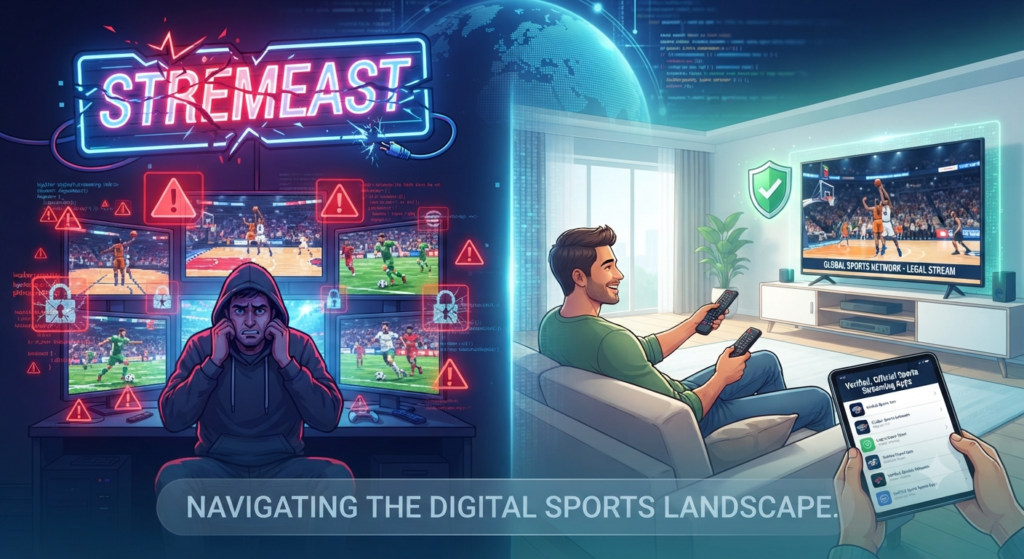
Stremeast has become a recognizable name in the digital ecosystem, primarily associated with the complex world of live sports streaming. As internet users increasingly move away from traditional cable television, platforms like Stremeast have surged in popularity. Offering accessibility that challenges conventional broadcasting models. Understanding the mechanics, legal implications, and safety considerations surrounding. Stremeast is essential for any modern viewer navigating the vast, often ambiguous, internet landscape.
The evolution of digital media has fundamentally shifted how we consume live events. While platforms like Stremeast provide a window into global sports. They operate in a gray area that requires users to balance convenience with cybersecurity awareness. This article explores the nature of Stremeast, the risks involved with third-party streaming sites, and the legal landscape defining digital distribution in 2026.
What is the Current Status of Stremeast?
Stremeast functions as a third-party aggregator that provides links to live sporting events from across the globe. By consolidating various unauthorized streams into a single, user-friendly interface, Stremeast gained a massive following among fans who want to watch games without the high cost of multiple subscription packages. However, it is important to clarify that Stremeast does not hold the official broadcasting rights to the leagues or events it features.
The digital footprint of Stremeast is characterized by frequent domain changes. Because these sites often host copyrighted material without authorization, they are frequently targeted by copyright holders, internet service providers (ISPs), and government agencies. This results in the site regularly “hopping” between different URLs, which can be confusing and dangerous for users who may unknowingly click on malicious links during the search for the latest active portal.
Why Do Users Choose Services Like Stremeast?
Users gravitate toward Stremeast primarily due to economic and accessibility factors. As noted in a 2025 study by the Digital Media Research Institute, consumers are increasingly experiencing “subscription fatigue,” where the cost of aggregating all necessary sports channels exceeds $200 per month.
- Cost Efficiency: Eliminates the need for expensive cable or multiple streaming service subscriptions.
- Accessibility: Offers a centralized hub for niche sports that may not be available on local broadcast networks.
- Ease of Use: Provides a simplified, web-based interface that works across various devices, including mobile phones, tablets, and smart TVs.
Evaluating the Risks: Safety and Security Concerns
Using platforms like Stremeast involves significant security risks that every user should understand. Because Stremeast does not follow standard regulatory oversight, the infrastructure powering the site is often utilized as a vector for cyberattacks.
According to the Global Cybersecurity Alliance (2026 Report), users navigating unauthorized streaming sites are 40% more likely to encounter malware, phishing attempts, or intrusive tracking software compared to those using official, licensed platforms. These risks are not just theoretical; they can lead to identity theft, financial fraud, and the compromise of personal device security.
Common Security Threats on Streaming Sites
- Malvertising: Malicious ads that execute scripts on your device simply by loading the page.
- Phishing Links: Fake pop-ups designed to steal login credentials for your email, banking, or social media accounts.
- Data Harvesting: Background tracking scripts that collect your IP address, browser history, and personal preferences to sell to third-party data brokers.
| Threat Type | Risk Level | Potential Consequence |
|---|---|---|
| Malware Injection | High | Device hijacking or ransomware |
| Phishing | Critical | Theft of financial and personal data |
| Tracking/Cookies | Moderate | Loss of privacy and aggressive ad targeting |
The Legal Landscape of Streaming
It is imperative to address the legal realities surrounding Stremeast. While the user experience might feel seamless, the act of accessing copyrighted content through unauthorized channels like Stremeast violates intellectual property laws in almost every jurisdiction.
Broadcasters pay billions of dollars for exclusive rights to transmit games. When sites like Stremeast distribute this content for free, they are essentially bypassing the legal revenue stream of sports leagues. In many regions, copyright enforcement has become increasingly sophisticated. Agencies now use deep packet inspection and cooperation with ISPs to track traffic to these domains. While users are often not the primary target of legal action, they can face warnings from their ISPs or, in extreme cases, be held liable for copyright infringement.
Alternatives to Stremeast: Staying Legal and Safe
For those seeking to enjoy sports without the risks associated with Stremeast, there are several legitimate avenues. The market has expanded significantly, offering tiered pricing models that cater to different budget levels.
Official Streaming Platforms
- League-Specific Apps: Platforms like NBA League Pass or NFL+ offer comprehensive coverage with high-definition quality and zero security risks.
- Aggregator Services: Services like YouTube TV, Hulu + Live TV, or FuboTV provide a cable-like experience with legal access to live channels.
- Regional Networks: Many local broadcasters now offer mobile apps that allow you to stream games legally if you have a cable subscription.
Investing in these services ensures you are supporting the athletes and leagues you enjoy, while guaranteeing a stable, high-quality viewing experience free from the threat of malware or sudden link expiration.
How to Protect Yourself Online
If you continue to explore the internet, including sites similar to Stremeast, you must prioritize your digital hygiene. Implementing these strategies will not make a site “legal,” but it will mitigate some of the inherent dangers of the open web.
- Use a Reliable VPN: A Virtual Private Network masks your IP address and encrypts your traffic, making it harder for ISPs and third parties to track your activity.
- Ad-Blocking Technology: Use high-quality, open-source ad blockers to prevent malicious scripts and intrusive pop-ups from executing.
- Endpoint Protection: Ensure your antivirus software is updated and active, providing real-time scanning of web content.
- Avoid Personal Information: Never provide credit card details, emails, or personal identifiers on any site that does not have an established, verified security reputation.
Conclusion: Weighing the Trade-offs
The debate surrounding Stremeast is ultimately a trade-off between convenience and safety. While Stremeast provides a solution to the rising costs of sports entertainment, the underlying risks to your digital identity and the legal ambiguity of the service are significant.
As we move further into 2026, the digital world is becoming increasingly policed, and platforms that ignore copyright laws are facing more frequent disruptions. By choosing legal, authorized streaming services, you gain access to superior support, higher video quality, and, most importantly, peace of mind. Your personal information and device security are far more valuable than the cost of a monthly subscription.
Frequently Asked Questions (FAQs)
1. Is Stremeast safe to use?
No, Stremeast is generally not considered safe. Because it is an unauthorized streaming site, it is a common host for malware, phishing scams, and aggressive data tracking, which pose significant risks to your device and personal data security.
2. Can I get in trouble for using Stremeast?
Yes, there is a risk. Accessing copyrighted content without authorization violates intellectual property laws. While many users may only receive warning notices from their ISPs, the legal risk varies by country and can include fines or service termination.
3. Why does Stremeast keep changing its domain?
Stremeast frequently changes domains to evade legal takedowns and ISP blocking. When copyright holders or authorities identify the current URL, they often issue injunctions to shut it down, forcing the operators to move the service to a new, “unblocked” domain.
4. Are there any legal alternatives to Stremeast?
Yes, many legal alternatives exist, such as official league passes (NBA League Pass, NFL+), live TV streaming services (YouTube TV, FuboTV, Sling TV), and local broadcast network apps. These options offer high-quality streams and legal protection.
5. Does a VPN make using Stremeast completely safe?
While a VPN helps mask your IP address and encrypt your internet traffic from your ISP, it does not protect you from every risk. A VPN will not stop you from inadvertently clicking on a phishing link or downloading a malicious file from the Stremeast website itself.